The EdTech Lesson for the Age of AI
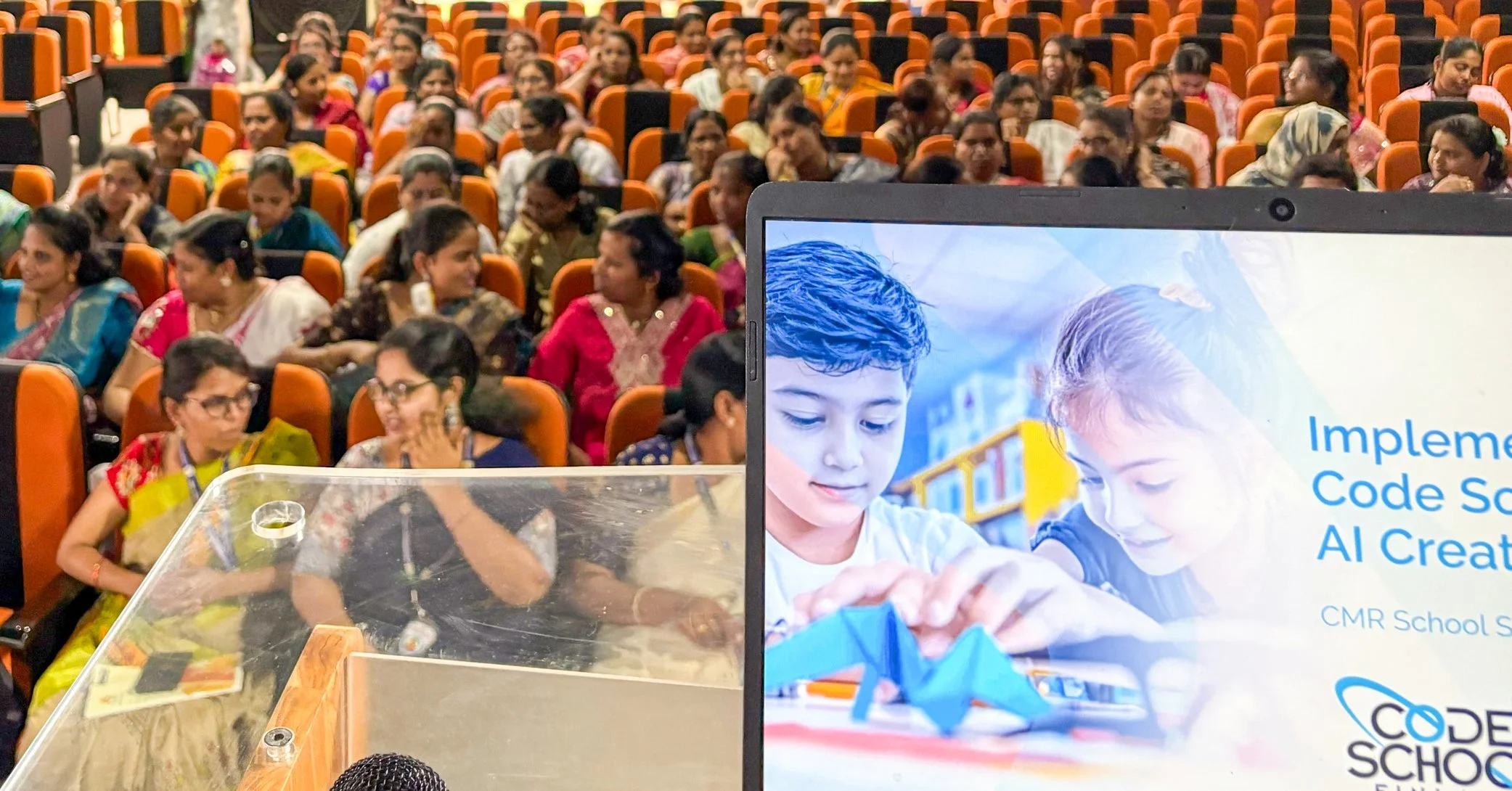
AI training at scale in Hyderabad in April 2026.
It seems we have seen this before.
A new wave of technology enters schools, expectations rise quickly, and adoption happens faster than anyone really has time for. There is a sense that something big is changing and that schools need to keep up.
About a decade ago, this was Edtech. Schools invested in platforms, devices, and digital content. On paper, the transformation looked impressive, but learning often did not change in a meaningful way. Not because the technology was poor - in many cases it was excellent! - but because we started from the wrong place: tools first.
We here at Code School Finland have seen this through our years in the Finnish Edtech industry, but it is also well documented. The OECD report Students, Computers and Learning concluded that “the results show no appreciable improvements in student achievement…” in systems that had invested heavily in technology.
Teacher training is the missing link
Now we are moving into the age of AI, and the pattern feels very familiar. There is an explosion of new tools, constant discussion around capabilities, and increasing pressure on schools to adopt and respond. The conversation is moving fast, but it is still largely centered around technology.
In Code School Finland’s recent AI training programs across different schools and countries, we have seen a consistent pattern. Teachers are already positive about AI: curious, open, and motivated. What they lack is not access to tools, but confidence, clarity, and a concrete understanding of how AI fits into everyday teaching.
Across trainings we held during the past year, the biggest improvements were not in tool usage, but in teachers’ readiness to bring AI into their own classroom practice.
From AI literacy to AI pedagogy
When that clarity emerges, the shift is not technical but pedagogical. Teachers begin to see how AI supports learning, projects, and student thinking. They move from knowing about AI to being able to teach with it.
Technology alone does not change education. It creates possibilities, but it does not translate them into learning. That translation happens through teachers.
As the World Bank EdTech approach paper puts it: “Technology is only as effective as the teacher using it.”
Start from teaching, not technology
With AI, we risk repeating the same sequence as with Edtech. If we focus on tools and rapid adoption, we will likely see the same pattern: early excitement, limited classroom impact. If we start from teaching - supporting teachers, building confidence, and integrating AI into meaningful learning - the outcome can be very different.
AI has real potential in education. The question is not whether we adopt AI, but whether we finally start from teaching - because this is a pedagogical shift, not a technological one.
At Code School Finland, we work with schools to implement AI literacy curricula and provide teacher training that helps educators guide students from passive AI use to confident, critical creation.
Is that relevant to you now? Feel free to reach out.
Contact
Kaisu Pallaskallio, CEO
Tel./Whatsapp +358 44 355 7355
kaisu@codeschool.fi