What two 16-year-olds learned about teaching AI
This summer, we had two interns at Code School Finland: our CEO Kaisu’s 16-year-old twin daughters. They spent time with our team, joined teacher training sessions and explored some of the tools and methods we use to teach AI.
Having two teenagers with us gave us a chance to see our work through different eyes. Young people experience AI and social media every day, but they see AI education from a very different perspective than the adults designing and teaching it. We appreciated their curiosity, their questions and the fresh perspective they brought to our work. So rather than telling you what they learned, we asked them to write about it themselves. Here is their view.
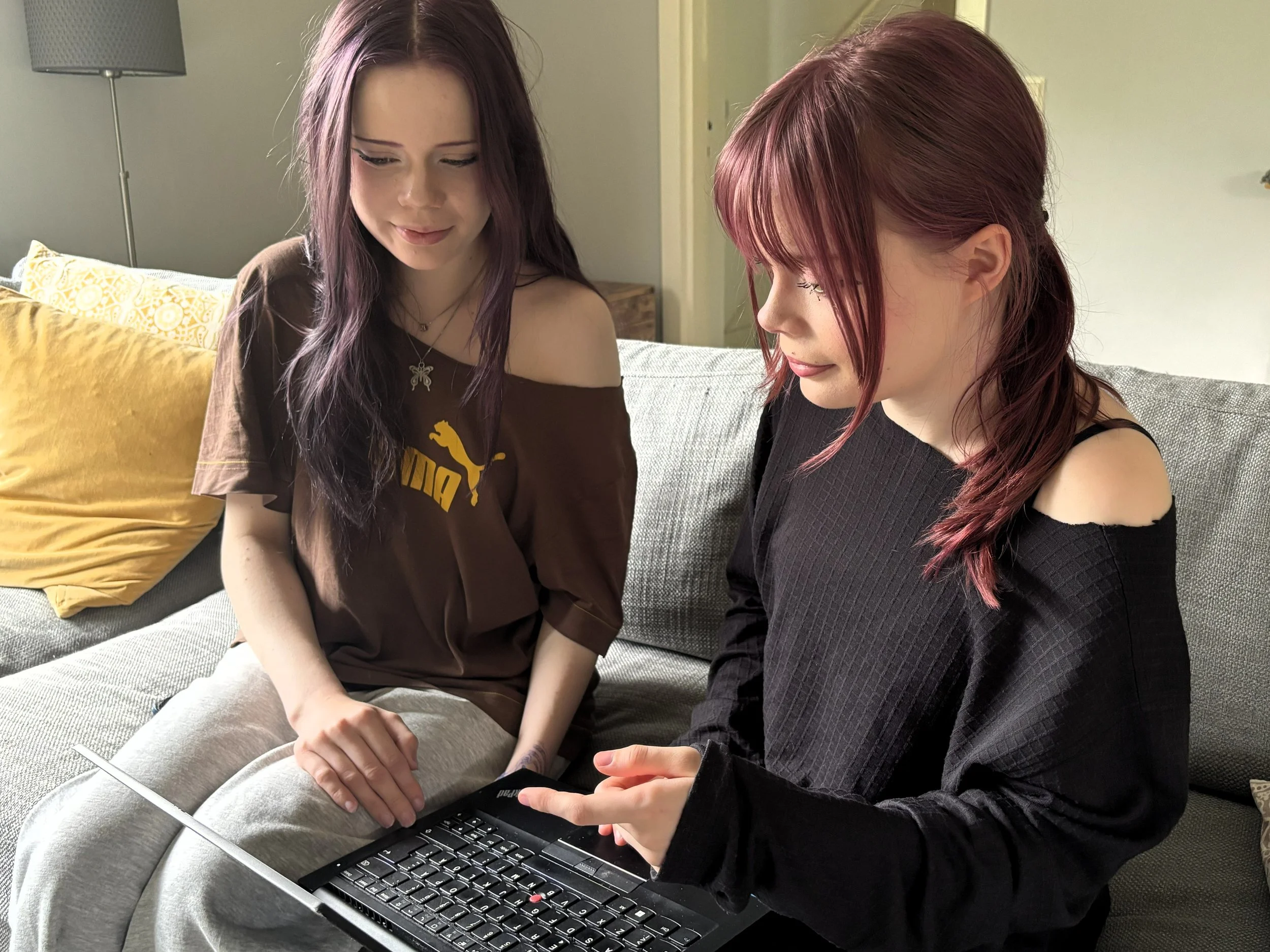
Summer interns Saimi and Hilma figuring out AI.
AI teaching doesn't need to be complicated to be effective
This summer, we, two 16-year-old high school students, had the chance to observe Code School Finland’s teacher training sessions. We saw teachers from different schools in foreign countries learning about artificial intelligence, its importance in today’s world and how it can be taught to students.
Through this experience, we realised how important it is that both teachers and students understand AI. When teachers learn about AI in a practical way, they become more confident and comfortable with it. And when teachers feel confident, it is easier for them to make the topic understandable and engaging for their students.
During the training sessions, we learned not only about the importance of AI, but also about how it actually works. There are several things you need to understand before using AI, but after taking part in the sessions and seeing how teachers in countries like India and Mexico were trained, we both came to the same conclusion: AI education doesn’t need to be complicated to be effective.
One of the first things we learned about was the importance of data. AI needs data to learn. For example, if you want an AI system to tell two objects apart, you need to give it examples of what those objects look like. Based on that data, it can learn to recognise patterns and make predictions. We found it interesting to see how something that sounds quite complicated can be demonstrated in such a simple way.
We also got to experiment with Teachable Machine and Social Media Machine, tools made available by the Generation AI project in Finland. Our experience with both was positive. Teachable Machine helped us understand how a machine can learn from examples. Social Media Machine showed us more about how social media platforms work and how they use data. As teenagers who use social media every day, this was especially eye-opening.
Both tools made AI easier to understand, even for someone with little or no previous experience. Instead of only hearing explanations about AI, we could experiment with it ourselves and see what was happening.
That was probably our biggest takeaway from the week: AI is a complicated technology, but learning about it doesn’t have to feel complicated.
When teachers understand AI in a clear and practical way, they can help their students understand it too. And from what we saw this week, sometimes the best way to start learning about AI is simply to try it, ask questions and see how it works.
— Saimi and Hilma
P.S. We wrote this article ourselves. AI only helped us check the grammar.